UFC Betting Integrity and Fight Market Protection
 Available in US
Every legitimate betting market depends on one assumption: that the event being wagered on is genuine. When that assumption breaks down — when fighters throw bouts, when outcomes are predetermined, when insiders exploit advance knowledge — the entire market collapses. The UFC knows this, bookmakers know this, and increasingly, federal law enforcement knows this too.
As someone who has placed bets on UFC fights for nearly a decade, I take integrity seriously — not as an abstract principle but as a practical concern that directly affects whether the odds I am betting into are trustworthy. Here is how the system actually works, where it has been tested, and what every UK punter should understand about the safeguards protecting the markets they bet on.
To ensure you are protected from suspicious line movements, familiarize yourself with UKGC regulations and UFC betting rules before opening an account.
IC360 Monitoring: Protecting UFC Betting Market Integrity
The UFC’s primary defence against betting manipulation is its partnership with IC360, an independent betting integrity monitoring service. IC360 tracks wagering activity across licensed bookmakers worldwide on every UFC event, analysing betting patterns for anomalies that could indicate insider knowledge or match-fixing.
The UFC has stated this relationship plainly. Like many professional sports organisations, UFC works with an independent betting integrity service to monitor wagering activity on its events. IC360 monitors wagering on every UFC event and conducts thorough reviews of the facts surrounding any bout where suspicious activity is detected.
What does “monitoring” actually look like in practice? IC360’s systems track odds movements, betting volumes, and the timing of wagers across multiple markets and jurisdictions. If an unusual concentration of money appears on a specific outcome — say, a significant volume of bets on a heavy underdog winning in a particular round — the system flags the activity for human review. Analysts then assess whether the betting pattern has a legitimate explanation, such as a sharp bettor making a large play, or whether it suggests potential manipulation.
The system is not infallible. No monitoring platform can catch every instance of manipulation in real time, and sophisticated actors can distribute wagers across enough operators and accounts to stay below detection thresholds. But IC360’s coverage creates a meaningful deterrent. Fighters and their associates know that betting activity is being watched, and that knowledge alone prevents a significant amount of potential corruption from ever being attempted.
The Dulgarian Case: When the System Got Tested
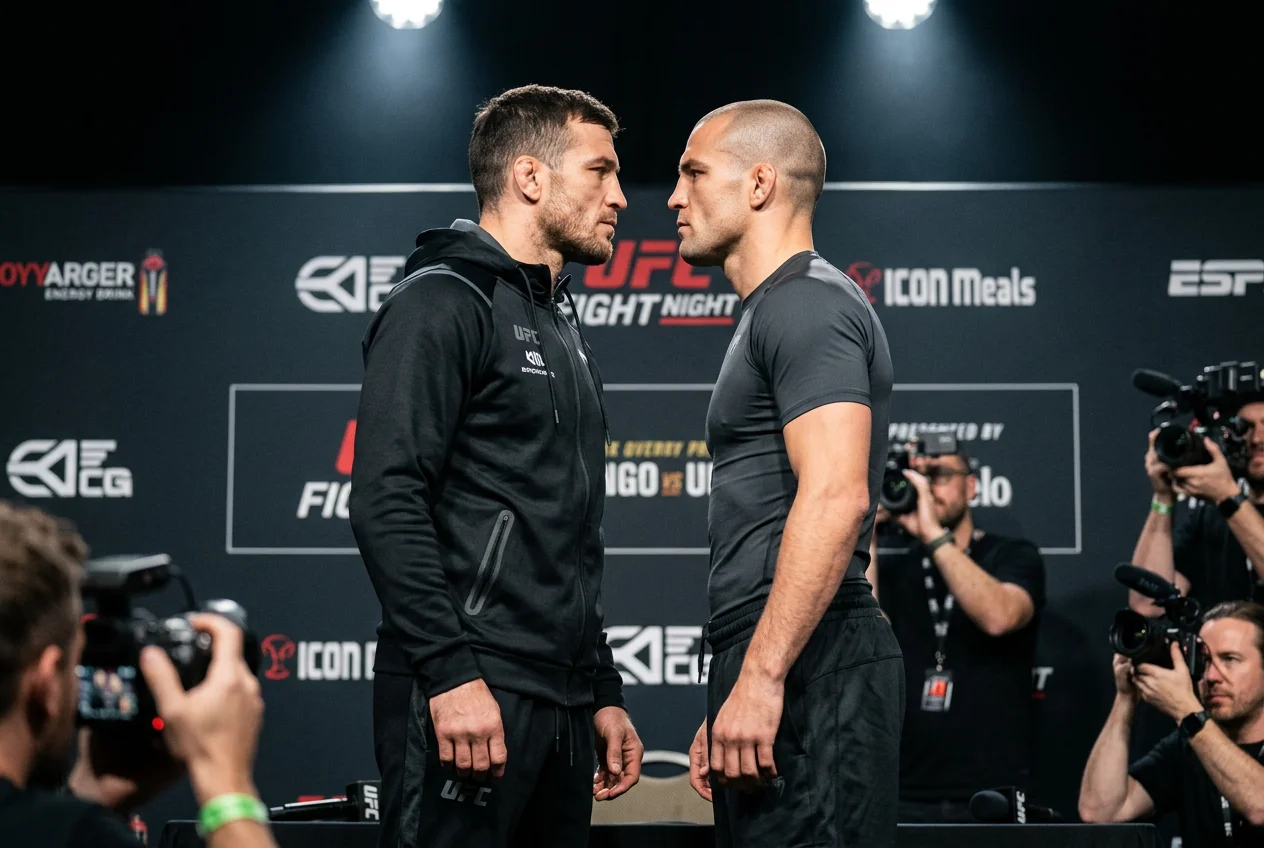
In November 2025, the UFC’s integrity infrastructure faced its most public test. Anomalous betting activity was detected on the bout between Dulgarian and del Valle, triggering an IC360 review and, ultimately, involvement from the FBI.
Dana White described the UFC’s response with characteristic directness. They contacted the fighter and his lawyer, asked what was going on, mentioned the unusual betting action, and asked whether the fighter was injured, owed money to anyone, or had been approached. When the fighter denied any involvement, the UFC’s next call was to the FBI. White’s message was unambiguous: if you try to manipulate fights, the organisation will be your worst enemy.
The case resulted in Caesars Sportsbook issuing refunds to bettors who had wagered on the affected bout — a rare but significant step that demonstrated the industry’s willingness to prioritise market integrity over short-term revenue. The investigation remained ongoing through early 2026, with IC360 conducting a thorough review of the surrounding facts.
For UK punters, the Dulgarian case is important not because it revealed a systemic problem — one case does not indicate widespread corruption — but because it demonstrated that the detection and response mechanisms actually function. Suspicious activity was flagged, investigated, and acted upon within days. That is precisely how an integrity system is supposed to work.
Fighter Pay and the Structural Integrity Risk
Any honest conversation about UFC betting integrity must address the elephant in the room: fighter compensation. UFC fighters receive approximately 15–18% of the organisation’s total revenue, compared to the 48–50% that athletes in the NBA, NFL, and NHL earn through collective bargaining agreements. In the first half of 2025, UFC generated roughly 775 million dollars in revenue, with fighters receiving an estimated 17% — approximately 255 million dollars spread across the entire roster.
That revenue split creates a structural vulnerability. Fighters who earn modest sums relative to the betting handles on their fights face a mathematical temptation that better-compensated athletes in other sports do not. A prelim fighter earning fifteen thousand dollars to show and fifteen thousand to win is competing in a bout that may generate hundreds of thousands of dollars in betting volume. The incentive structure is not aligned to maximise integrity.
This does not mean UFC fighters routinely fix fights — the evidence suggests the overwhelming majority compete honestly. But it does mean the sport carries an inherent integrity risk that the economic structure of other major leagues mitigates through higher compensation. The UFC has addressed this concern by investing in monitoring (IC360), cooperating with law enforcement (FBI), and publicly reinforcing the consequences of manipulation. Whether those measures fully compensate for the pay gap is a question the industry continues to debate.
Dana White has been vocal about the UFC’s position, stating that the organisation supports a healthy, legal sports betting market to drive fan engagement, broadcast value, and sponsorships. That support comes with an implicit acknowledgement that integrity is a prerequisite. Legal betting, White has argued, provides transparency and integrity protections that the alternative — unregulated, offshore markets — cannot.
We strictly recommend fully licensed operators on our safe UK MMA betting portal to guarantee fair payouts.
What UK Bettors Should Take Away
So what does all of this mean practically if you are placing UFC bets through a UKGC-licensed bookmaker?
First, understand that the integrity infrastructure exists and is active. The UFC is not ignoring the betting side of its business — it is investing in monitoring, cooperating with regulators, and responding publicly when issues arise. That does not guarantee every fight is clean, but it does mean the system has meaningful safeguards.
Second, be alert to line movement that does not have an obvious explanation. Sharp money, injury news, and weigh-in results all produce legitimate odds movement. But if a line on a relatively obscure bout shifts dramatically without any public information to explain it, that is worth noting. You do not need to assume corruption — most unexplained line movements have mundane causes — but you should factor the uncertainty into your analysis rather than ignoring it.
Third, recognise that betting through regulated, UKGC-licensed operators is itself a form of protection. Licensed bookmakers participate in the integrity-monitoring ecosystem. Unlicensed offshore operators do not. If a fight is compromised, your regulated bookmaker is far more likely to issue refunds or void the market — as Caesars did in the Dulgarian case — than an unlicensed platform with no accountability. For a closer look at how the fighter compensation structure shapes these risks, our analysis of fighter pay and betting economics examines the numbers in detail.
Has there ever been a confirmed match-fixing case in the UFC?
There have been allegations and investigations but no publicly confirmed, proven case of match-fixing resulting in a criminal conviction related to a UFC bout as of early 2026. The most prominent case involved the Dulgarian vs del Valle bout in November 2025, where suspicious betting activity triggered an IC360 review and FBI involvement. Caesars Sportsbook issued refunds on the affected fight. The investigation underscored that the detection systems function but also highlighted that the risk of manipulation exists, particularly at lower levels of the card where fighter compensation is modest relative to betting volumes.
How does IC360 monitor UFC betting activity?
IC360 monitors wagering activity across licensed bookmakers worldwide for every UFC event. Their systems track odds movements, betting volumes, and the timing and distribution of wagers. When the system detects anomalous patterns — such as unusual concentrations of money on a specific outcome, atypical betting volumes for a fight’s profile, or coordinated activity across multiple markets — the activity is flagged for human review. IC360 analysts then assess whether the pattern has a legitimate explanation or warrants further investigation, potentially involving the UFC directly and law enforcement agencies like the FBI.
Written by the editors at ufc Fighter Betting.