UFC Betting Odds Formats and Implied Probability
 Available in US
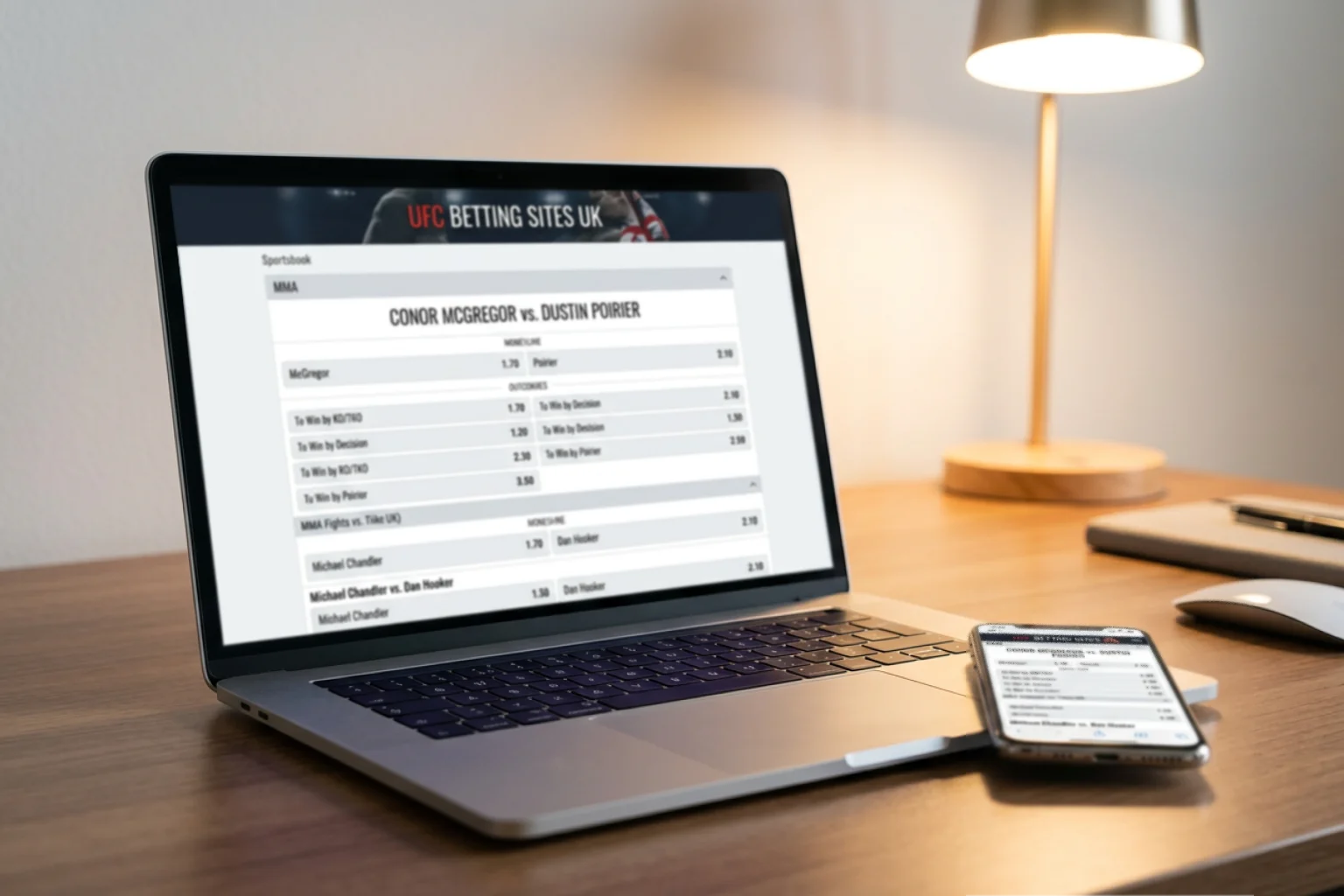
I still remember the first UFC card I tried to bet on as a UK punter. I opened a bookmaker’s app, saw a fighter listed at 4/6, another at 11/8, and a third priced at -220 on an American site I’d stumbled across. Three numbers describing the same thing — who’s likely to win a fight — and none of them made intuitive sense on first glance. Nine years later, reading odds across formats is second nature, but I’ve watched hundreds of sharp bettors lose money not because they picked the wrong fighter, but because they misread the price they were getting.
UFC betting in the UK sits at a fascinating crossroads. The sport’s global betting handle hit $10.3 billion in 2024, growing 17% year-on-year, and that money flows through platforms displaying odds in at least three different formats. Around 10% of the UK adult population actively bets on sport online, with 290 million online bets placed every month on real events. A significant and growing slice of that action lands on MMA.
This guide exists because understanding odds is not a nice-to-have — it’s the foundation everything else rests on. If you can’t convert between fractional, decimal, and American odds in your head, you can’t spot value. If you don’t understand implied probability, you’re trusting the bookmaker’s number without questioning it. And if line movement looks like random noise rather than a signal, you’re leaving information on the table.
What follows is a systematic walkthrough of every odds format you’ll encounter when betting on UFC in the UK, the maths behind them, and the practical skills that separate punters who understand their prices from those who just follow them. I’ve kept the formulas simple and the examples grounded in real UFC scenarios. By the end, you’ll read a betting slip the way a trader reads a ticker — fluently, critically, and with an eye for what the market is actually telling you.
Table of Contents
- Fractional UFC Odds: Calculating UK Sportsbook Payouts
- Decimal Odds: The European Standard
- American Odds: Reading Plus and Minus Lines
- Converting Between Odds Formats
- Implied Probability and the Bookmaker’s Margin
- Line Movement at a Glance
- Odds Shopping Across UK Bookmakers
- Odds-Reading Mistakes That Cost UK Punters Money
Fractional UFC Odds: Calculating UK Sportsbook Payouts
The first time I explained fractional odds to a mate who’d just started betting on UFC, I used a pub analogy: if someone offers you 5/2 on a fighter, they’re saying “for every 2 quid you risk, I’ll give you 5 back in profit if you’re right.” He got it immediately. The format is baked into British betting culture — walk into any high street bookmaker, and every price on the board is fractional.
Fractional odds express the ratio of profit to stake. A fighter priced at 3/1 returns three pounds of profit for every pound you wager, plus your original stake back. A fighter at 1/4 returns just 25p profit per pound staked — a heavy favourite where the bookmaker believes the outcome is near-certain. The number on the left is always your potential profit; the number on the right is always what you need to put down.
Where it gets interesting for UFC is the range of prices you’ll see on a single card. A dominant champion defending against a late replacement might open at 1/8 — meaning you’d need to stake eight pounds to win one. Further down the card, a debuting prospect against an unranked opponent might sit at 6/4. And in the odd mismatch where a fighter steps up on short notice, you’ll find prices like 7/1 or even 12/1. Across a single UFC event, fractional odds can span from 1/20 to 20/1, a wider range than you’d typically see in football or rugby because combat sports produce more decisive outcomes.
To calculate your total return from fractional odds, multiply your stake by the fraction and then add the stake back. A 10-pound bet at 9/4 works out to (10 x 9/4) + 10 = 22.50 + 10 = 32.50 total return, with 22.50 being your profit. For odds-on prices like 4/9, the same logic applies: (10 x 4/9) + 10 = 4.44 + 10 = 14.44 total return. The profit is smaller because the market considers this outcome more likely.
One detail worth noting: UK bookmakers sometimes display fractional odds that look unusual at first — things like 11/10 or 5/6 instead of cleaner numbers. These exist because the bookmaker is pricing the market with precision rather than rounding to the nearest whole fraction. An 11/10 price tells you the fight is essentially a coin flip with a slight edge to one side, and that granularity matters when you’re comparing across operators. Every month, UK punters place around 290 million online bets, and a meaningful number of those bets are won or lost in the margins between 11/10 and evens.
Decimal Odds: The European Standard
Decimal odds are what I switched to after my second year of serious UFC betting, and I haven’t looked back. Not because fractional odds are inferior — they’re not — but because decimals make comparison shopping faster when you’re scanning five bookmakers’ apps in the 30 minutes before a fight card starts.
The format is straightforward: the decimal number represents your total return per pound staked, including the stake itself. A fighter at 2.50 returns 2.50 for every pound wagered — that’s 1.50 profit plus your original pound. A favourite at 1.25 returns 1.25 per pound, meaning 25p profit. The higher the decimal, the bigger the underdog; the closer to 1.00, the heavier the favourite.
Decimals dominate across continental Europe and are the default on most betting exchanges. If you’ve ever used a platform based outside the UK, you’ve likely encountered them first. The conversion from fractional is simple: divide the fraction, then add 1. So 3/1 becomes (3 divided by 1) + 1 = 4.00. And 4/9 becomes (4 divided by 9) + 1 = 1.44. That “+1” is what distinguishes decimals from fractional — it bakes the returned stake into the number.
The practical advantage shows up when you’re building accumulators or comparing prices quickly. Multiplying decimals together gives you the combined odds instantly. If you fancy three fighters at 1.80, 2.10, and 1.50, the accumulator price is 1.80 x 2.10 x 1.50 = 5.67. Try doing that with 4/5, 11/10, and 1/2 in your head — it’s possible, but slower. For a sport like UFC where you might be scanning a 12-fight card for value across multiple bookmakers, that speed matters.
Most UK-facing bookmakers let you toggle between formats in settings. I’d recommend setting your default to whichever format you can read fastest, but training yourself to think in decimals when comparing lines. The mental maths is cleaner, and when the difference between two prices is 2.35 versus 2.40, you see the gap immediately rather than working out whether 27/20 is better or worse than 7/5.
American Odds: Reading Plus and Minus Lines
If you follow any UFC betting content from the States — podcasts, Twitter accounts, preview shows — you’ll hit American odds within minutes. They look alien at first, but once the logic clicks, you’ll read them as naturally as fractional.
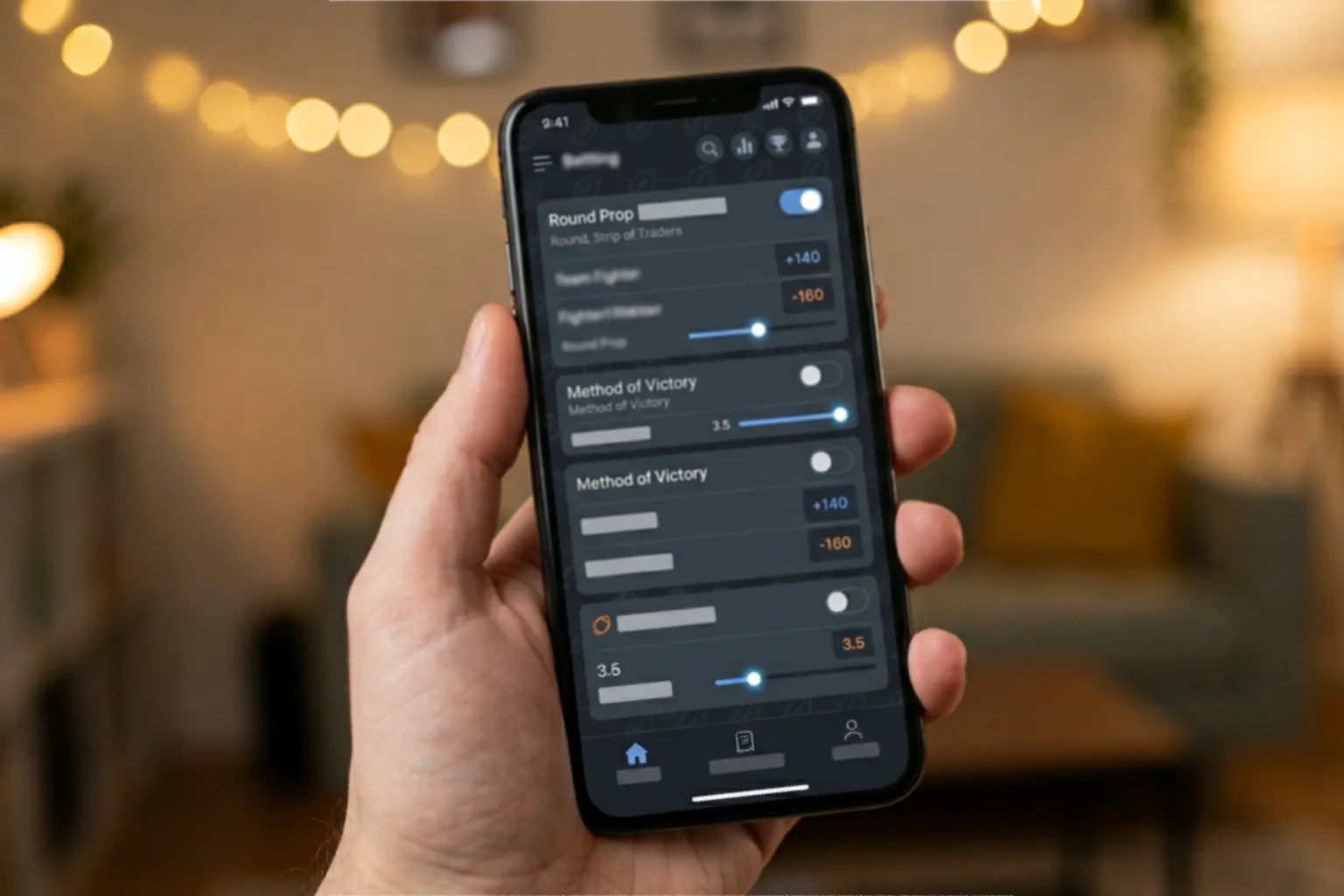
American odds split into two categories. Positive numbers (like +250) show how much profit you’d make on a 100-unit stake. So +250 means a 100-pound bet returns 250 pounds in profit, plus your 100 back. Negative numbers (like -180) show how much you need to stake to make 100 units of profit. A -180 price means you’d put down 180 pounds to win 100 in profit. The bigger the positive number, the longer the shot. The bigger the negative number, the heavier the favourite.
The format reveals something interesting about how the American market views UFC fights. Odds in the -400 to -900 range — seriously heavy favourites — have historically landed at an 88-93% accuracy rate since 2013. But the closer you get to a pick’em range, say +100 to -122, outcomes become essentially a coin toss, with those prices delivering winners only about 51% of the time. That gap between extreme favourites and even-money fights is wider in UFC than in most team sports, because individual combat produces more decisive skill gaps at the top and more chaos in the middle.
The reason you need to understand American odds even as a UK punter comes down to information access. The sharpest UFC odds analysis, the earliest line releases, and most of the detailed handicapping content originates from the US market. If a respected analyst says “I’m backing the dog at +320,” you need to know instantly that’s roughly 16/5 in fractional or 4.20 in decimal. Hesitation costs you — by the time you’ve pulled out a converter app, the line may have already moved.
A quick mental shortcut: for positive American odds, divide by 100 to get the fractional profit per pound. So +320 means 3.20 profit per 1 staked, or roughly 16/5. For negative odds, divide 100 by the number (ignoring the minus sign). So -180 means 100/180 = 0.56 profit per 1 staked, or roughly 5/9. These approximations get you close enough for real-time decisions; you can refine the exact figure later.
Converting Between Odds Formats
I keep a mental conversion table for the UFC odds I see most often, and after a while it becomes muscle memory. But when you’re starting out, having the formulas written down saves time and prevents costly errors. Here’s the core set of conversions you’ll actually use.
Fractional to decimal: divide the numerator by the denominator, then add 1. For example, 7/4 becomes (7 / 4) + 1 = 2.75. This works for every fractional price, from 1/10 (which becomes 1.10) to 25/1 (which becomes 26.00).
Decimal to fractional: subtract 1 from the decimal, then express the result as a fraction. So 3.50 becomes 3.50 – 1 = 2.50, which is 5/2. The tricky part is reducing the fraction to its simplest form — 2.50 is 5/2, not 250/100. For decimals like 1.91, you’d get 0.91, which is approximately 10/11. Most bookmaker apps handle this conversion automatically, but knowing the logic means you’ll catch display errors when they happen.
American to decimal: for positive odds, divide by 100 and add 1. So +175 becomes 1.75 + 1 = 2.75. For negative odds, divide 100 by the absolute value and add 1. So -200 becomes (100/200) + 1 = 1.50.
Decimal to American: if the decimal is 2.00 or higher, subtract 1 and multiply by 100 to get the positive American line. So 3.40 becomes (3.40 – 1) x 100 = +240. If the decimal is below 2.00, divide -100 by (decimal minus 1). So 1.60 becomes -100 / 0.60 = -167.
The common reference points worth memorising: evens is 2.00 is +100. A 2/1 shot is 3.00 is +200. A 1/2 favourite is 1.50 is -200. And 4/1 is 5.00 is +400. Once you have those four anchors, everything else falls into place relative to them. When I’m watching a UFC card and someone mentions a price in any format, my brain automatically snaps it to the nearest anchor and adjusts from there.
Implied Probability and the Bookmaker’s Margin
Here’s the question that changed how I approach UFC betting entirely: what does a price of 4/7 actually tell me about the fight? Not how much I’d win — I already knew that. But what probability the bookmaker is assigning to that outcome. The answer is implied probability, and it’s the single most important concept in this entire guide.
Implied probability converts odds into a percentage that represents the market’s assessment of how likely an outcome is. The formula for decimal odds is simple: divide 1 by the decimal price. A fighter priced at 1.57 (which is 4/7 fractional) has an implied probability of 1 / 1.57 = 63.7%. A fighter at 2.80 (9/5) carries an implied probability of 1 / 2.80 = 35.7%.
Now, if you add up the implied probabilities for both fighters in a UFC bout, you’ll notice the total exceeds 100%. That surplus is the bookmaker’s margin — the vig, the overround, the built-in house edge. On a typical UFC moneyline, the combined implied probability might total 105-108%. That extra 5-8% is profit margin. It’s why bookmakers make money long-term regardless of which fighter wins.
Favourites in the UFC win roughly 65.5% of their fights over the last decade. That number is your baseline. If a bookmaker prices a favourite at an implied probability of 72%, but your own analysis says the true probability is closer to 65%, the value sits with the underdog. If the implied probability is 58% and you believe it should be 70%, the favourite is the value play. This is what handicapping ultimately reduces to: comparing your estimated probability against the market’s implied probability and betting where you find a gap.
To strip the margin out and see the “true” implied probability, divide each fighter’s implied probability by the total of both. If Fighter A is at 1.57 (63.7%) and Fighter B is at 2.80 (35.7%), the total is 99.4% — wait, that’s under 100%. Recalculating with tighter prices: Fighter A at 1.53 (65.4%) and Fighter B at 2.65 (37.7%), the total is 103.1%. Divide each by 1.031: Fighter A’s true implied probability is 63.4%, Fighter B’s is 36.6%. That 3.1% overround is roughly average for a UFC moneyline in the UK market.
Understanding margin matters because it varies between bookmakers, between sports, and between markets within the same fight. Moneyline margins on UFC tend to be tighter than prop bet margins, which means the bookmaker takes a bigger cut on your method-of-victory or round-betting wagers. Knowing where the margin is fattest helps you decide where your edge needs to be larger to justify a bet.
Line Movement at a Glance
UFC odds don’t sit still. A fighter might open at 6/4 on Monday and close at evens by Saturday night. That movement isn’t random — it’s information, and reading it correctly is a skill worth developing.
Lines move for three main reasons: sharp money, public money, and news. Sharp money comes from professional bettors or syndicates who bet early and bet large, forcing the bookmaker to adjust. Public money — the recreational volume that floods in closer to fight night — tends to push favourites even shorter, especially on PPV headliners with household names. And news events like injuries, weight-cut issues, or training camp changes can shift a line dramatically in hours.
The 2024 data underlines why line movement matters in UFC specifically. Underdogs priced at +200 and above won 39% of their fights that year, a sharp jump from the historical average of 28%. That kind of shift means the closing line wasn’t always a better predictor than the opening line — and punters who caught early value before the line moved toward the favourite banked real profit. As one analyst put it, UFC’s structure makes it uniquely suited to betting because each card is a discrete, finite event with a binary result within a predictable timeframe, and that structure means line movement often reflects genuine information rather than just noise.
Odds Shopping Across UK Bookmakers
I run accounts with four UK bookmakers for UFC, and the reason is simple: the same fighter on the same card will be priced differently depending on where you look. I’ve seen differences of 10-15% in implied probability on undercard fights — that’s not a rounding error, it’s free money left on the table by anyone who bets with a single operator.
Odds shopping — comparing prices across licensed bookmakers before placing a bet — is the easiest edge available to UK punters. It requires zero analytical skill, zero insider knowledge, and zero risk. You’re simply taking the best available price rather than the first one you see. Over hundreds of bets, those fractional improvements compound into a significantly higher return on investment.
The UFC-bet365 partnership that launched in March 2026 is relevant here. Trip Stoddard, bet365’s Head of Development, described the deal as a defining moment that would deepen the operator’s commitment to sports where live action and fan engagement are inseparable. That kind of investment typically translates into more competitive UFC pricing, more market depth, and more promotional offers — all of which benefit the punter who shops around. When a major operator invests heavily in a sport, their pricing team allocates more resources to getting the lines right, which in turn pressures competitors to sharpen their own prices.
The practical approach: open your bookmaker apps 24-48 hours before a UFC card. Note the prices on your target fights. Set a reminder to check again after the official weigh-in on Friday. By fight night, you’ll have a clear picture of which operator is offering the best price on each bout. The whole process takes ten minutes spread across three days, and the returns over a year of UFC betting are measurable.
One thing I’d flag: don’t chase the best price on every single bet to the point where you’re spreading your bankroll so thin across operators that you can’t act quickly when a genuinely sharp opportunity appears. Having two or three go-to bookmakers where you keep meaningful balances is more practical than maintaining active accounts at a dozen. Pick the ones with the deepest UFC markets, the fastest withdrawal times, and the most consistently competitive pricing.
Odds-Reading Mistakes That Cost UK Punters Money
After nine years of analysing UFC bets — my own and other punters’ — the same mistakes come up over and over. They’re not analytical failures; they’re odds-reading errors that a bit of awareness would fix entirely.
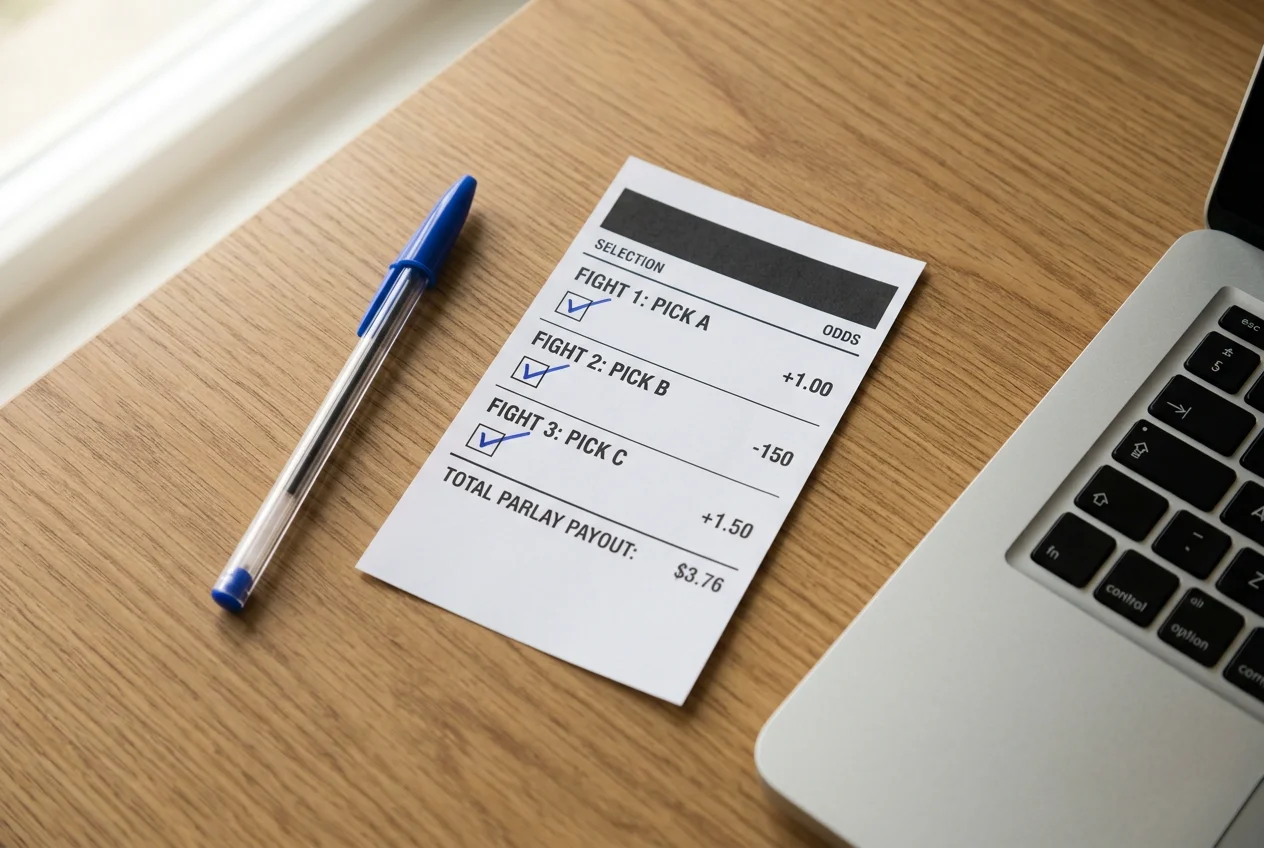
The first is confusing fractional profit with total return. A bet at 3/1 returns four pounds total per pound staked, not three. I’ve seen people calculate their potential winnings, place the bet, and then feel short-changed when they receive “less” than expected. They weren’t short-changed — they forgot to subtract their stake from the total. It sounds basic, but when you’re doing quick mental maths on fight night with six bouts left on the card, it’s easy to slip.
The second is treating all odds-on prices as interchangeable. A fighter at 1/3 and a fighter at 1/6 are both “heavy favourites,” but the difference in implied probability is enormous — 75% versus 85.7%. Lumping them together under the same mental category leads to sloppy accumulator construction, where you chain together three “sure things” without realising one of them carries meaningfully more risk than the others.
The third mistake is ignoring the direction of a line move and only looking at the current price. If a fighter opened at 6/4 and has drifted to 2/1, that’s a different proposition from a fighter who opened at 5/2 and has been backed down to 2/1. The first is getting longer — money is moving against them. The second is getting shorter — money is backing them. They might sit at the same price right now, but the context surrounding that price tells very different stories. Treat the current number as a snapshot, not the full picture.
The fourth — and this one specifically affects UK punters who follow American content — is misapplying American odds conversions in your head and ending up with the wrong fractional equivalent. The most common error is treating -150 as if it means the fighter is a 3/2 favourite. It doesn’t. -150 means you need to stake 150 to win 100, which converts to 2/3 in fractional (a much shorter price than 3/2). Flipping the numerator and denominator is a small cognitive mistake with a large financial consequence. When in doubt, use the decimal conversion as an intermediate step — it’s harder to get wrong.
Finally, over-fixating on the odds number without ever translating it into probability. If you can’t tell me the implied probability of a 5/4 shot within a couple of seconds (it’s about 44.4%), you’re not reading the market — you’re just looking at numbers. The different UFC bet types all use the same odds formats, but the margins baked into those odds vary across markets. Training your brain to think in probabilities rather than raw prices is what separates recreational punters from serious ones.
What is the easiest odds format for UFC betting?
Decimal odds are the easiest to work with for calculations. The number shows your total return per pound staked, making it simple to compare prices across bookmakers and multiply legs in an accumulator. Most UK bookmakers let you switch to decimal in your account settings.
How do you calculate implied probability from fractional odds?
Convert the fractional odds to decimal first by dividing the fraction and adding 1. Then divide 1 by the decimal. For example, 5/2 becomes 3.50 in decimal, and 1 divided by 3.50 equals 0.286 — so the implied probability is 28.6%.
Why do UFC odds change between the weigh-in and fight night?
Odds shift due to new information entering the market. Weigh-in results can reveal a difficult weight cut, which prompts sharp bettors to adjust their positions. Public money also floods in closer to fight time, especially on main events, pushing popular fighters’ prices shorter. Injury news or camp reports can cause sudden moves too.
Do all UK bookmakers display UFC odds in the same format?
No. Most UK bookmakers default to fractional odds, but nearly all allow you to switch between fractional, decimal, and American formats in your account or app settings. The underlying prices may also differ between bookmakers, which is why comparing odds across multiple operators before placing a bet is essential.
Created by the ”ufc Fighter Betting” editorial team.