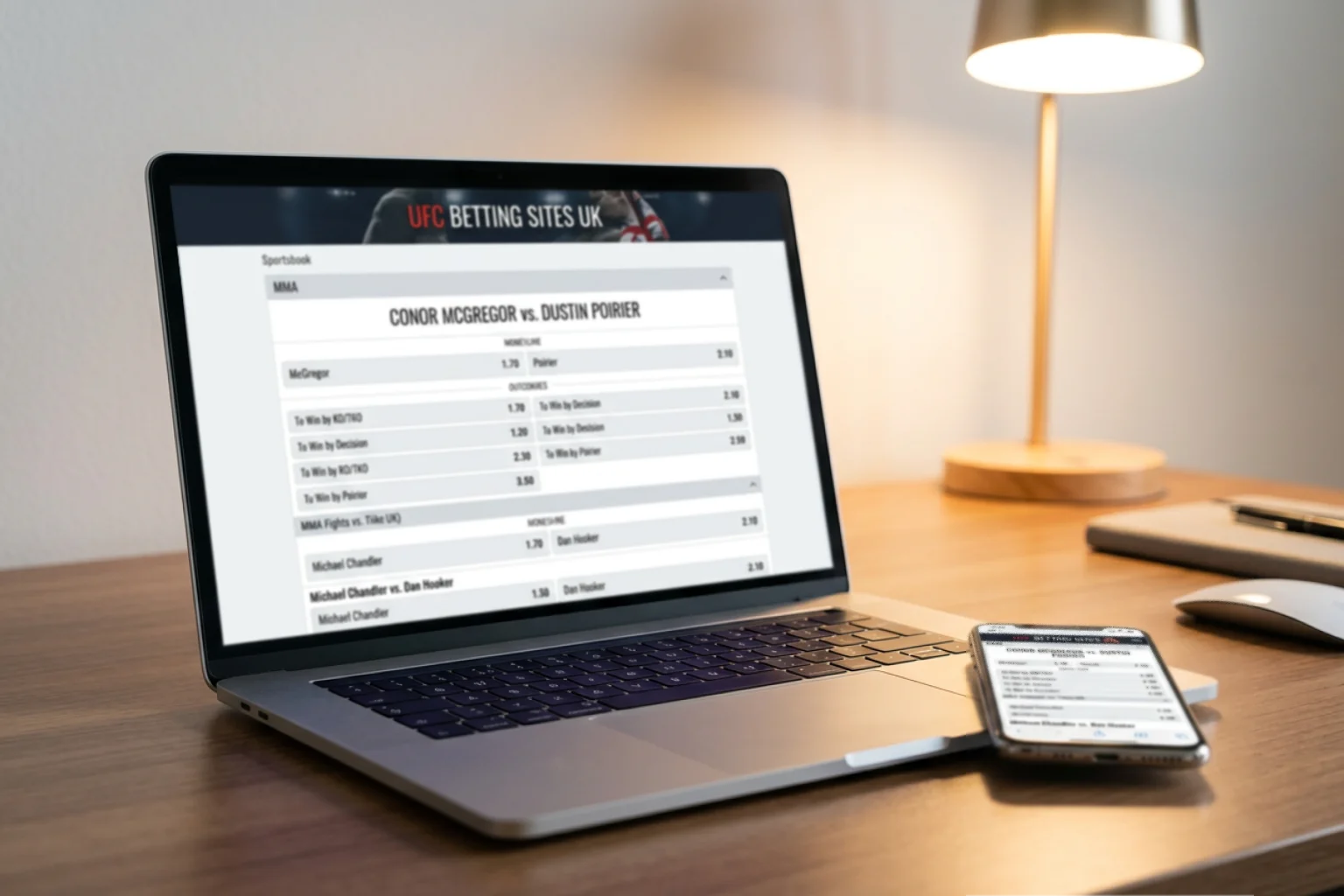
UFC Betting Line Movement: Why Odds Shift and How to React
 Available in US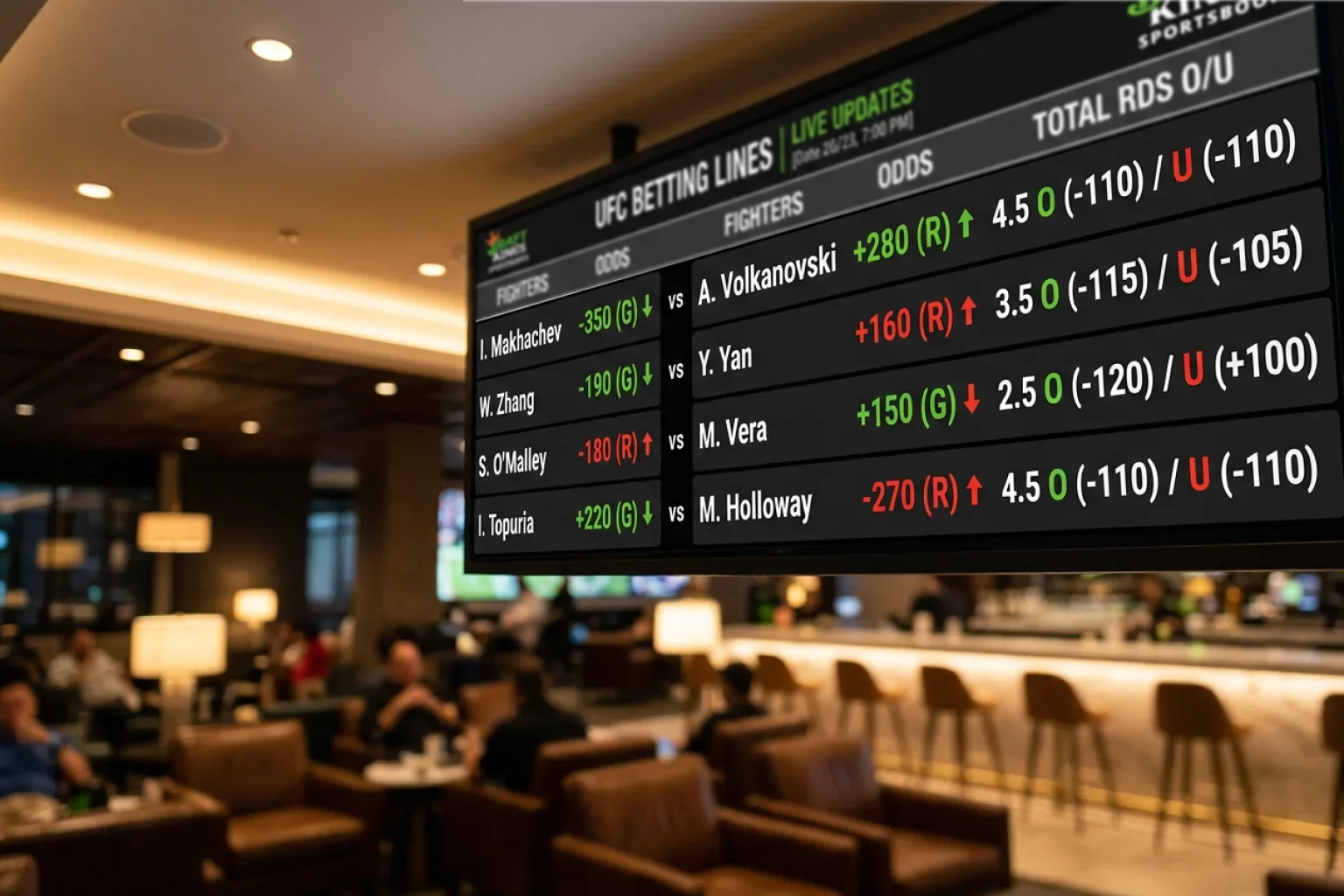
You check the odds on Monday and your fighter is 3/1. You check again on Friday and they are 5/2. By fight night, they are 2/1. The fighter has not changed. The matchup has not changed. So what has?
Line movement — the shift in betting odds between opening and fight time — is one of the most misunderstood aspects of UFC betting. Most casual punters either ignore it entirely or react to it emotionally, shortening their bets because the line moved away from them or chasing steam because it moved in their direction. Neither response is optimal. Understanding why lines move and how to use that information is what separates recreational bettors from informed ones.
Why UFC Lines Move
Betting odds are not static predictions. They are living prices set by bookmakers and adjusted continuously in response to betting activity. When money flows disproportionately to one side of a fight, the bookmaker adjusts the line to balance their exposure. That adjustment is the line movement you observe.
The most common cause of significant line movement is sharp money — large wagers placed by professional or highly informed bettors whose historical accuracy commands respect from the bookmakers. When a known sharp bettor places a substantial bet on a UFC underdog, the bookmaker does not wait for the rest of the market to follow. They move the line immediately, because sharp money tends to be right more often than the broader market.
In 2024, underdogs with closing odds of +200 or longer won approximately 39% of their fights — a dramatic increase from the historical average near 28%. Part of that spike reflected sharp bettors identifying and exploiting value on specific underdogs, and the line movement on those fights told the story in advance. Fights where the underdog’s line shortened significantly between opening and closing often reflected sharp money flowing to that side.
Injury news and training-camp reports also move lines, particularly in the days immediately before a fight. A credible report that a fighter is dealing with a hand injury or had a poor training camp can shift the odds by several percentage points. The challenge for bettors is distinguishing genuine injury intelligence from rumour and misinformation — a problem that is especially acute in MMA, where camp news is less rigorously reported than in major team sports.
Weigh-in results produce some of the most dramatic line movements in UFC betting. A fighter who misses weight or appears visibly drained at the weigh-in triggers rapid odds adjustments. These movements typically happen in a narrow window — the hours between the official weigh-in and the first fights on the card — and represent one of the clearest opportunities for bettors who are watching closely.
Sharp Money Versus Public Money
Not all line movement carries the same informational value. The critical distinction is between movements driven by sharp money and those driven by public money.
Sharp money moves lines early and efficiently. Professional bettors tend to place their wagers as soon as odds open, capturing the most favourable prices before the market adjusts. If a line moves significantly in the first twenty-four hours after opening, that movement is more likely to reflect sharp opinion than public sentiment. Pay attention to these early moves — they often indicate where the smartest money in the market believes value exists.
Public money moves lines later and less efficiently. As a fight approaches — particularly on PPV cards with major promotional coverage — casual bettors pile in, typically backing the more recognisable fighter or the favourite. UFC 300 drew approximately 1.2 million PPV purchases, and the betting volume around events of that scale produces significant public-money flows. These late, one-directional movements often push the favourite’s line shorter than the true probability warrants, creating contrarian value on the other side.
The timing of movement is your diagnostic tool. Early movement equals sharp signal. Late movement equals public noise. Both are useful information, but they tell you different things. Early sharp movement says “the informed market has identified an edge here.” Late public movement says “the casual market is overvaluing name recognition” — and therefore the other side may carry value.
Timing Your Bets Around Line Movement
Knowing why lines move is academic unless you can use that knowledge to improve the timing and quality of your bets.
The first principle is straightforward: if you have a strong opinion on a fight, bet early. UFC odds typically open several days to a week before an event. The opening line reflects the bookmaker’s initial assessment with limited market input. If your analysis agrees with the sharp early money, placing your bet before that money fully moves the line captures a better price. Waiting until fight day often means accepting a line that has already adjusted to the information you are using.
The exception is when you are specifically waiting for weigh-in information. If your bet depends on how fighters look at the weigh-in — if you are targeting fights where a difficult weight cut might compromise the favourite — then waiting until after weigh-ins is the correct strategy, even if the line has moved unfavourably on other factors. The weigh-in information can override earlier movements and create a fresh value window.
Do not chase steam. If a line has already moved significantly in the direction you wanted to bet, the value may already be gone. A fighter who opened at 3/1 and has moved to 2/1 has already absorbed the sharp money’s opinion into the price. Betting at 2/1 on a fighter who was 3/1 two days ago is a worse bet than the sharp bettors got, and you are essentially paying a premium for information that is already priced in.
Reverse Line Movement and What It Tells You
Reverse line movement is one of the most discussed concepts among sharp UFC bettors, and it deserves careful examination because it is often misunderstood.
Standard line movement follows the money: more bets on Fighter A, Fighter A’s odds shorten. Reverse line movement is the opposite: the majority of public bets favour Fighter A, but the line moves in Fighter B’s direction. How is that possible? It happens when the sharp money on Fighter B — though representing fewer individual bets — outweighs the public volume on Fighter A in total dollars wagered.
When Dana White described the UFC’s response to suspicious betting activity in the Dulgarian case, he emphasised that unusual betting action triggers immediate investigation. Reverse line movement is not inherently suspicious — it occurs naturally when sharp and public money disagree — but it does indicate a meaningful divergence between where the majority of bettors and the most informed bettors believe value lies.
For UK punters, monitoring reverse line movement requires access to betting-percentage data, which some specialised MMA analytics sites provide. When you see that 70% of bets are on Fighter A but the line is moving toward Fighter B, the sharp side of the market is telling you something. That does not make Fighter B a guaranteed winner — it makes Fighter B a candidate for serious analytical attention.
The practical approach is to use reverse line movement as a research prompt rather than a betting signal. When you spot it, dig deeper into the matchup. Look for the angles that sharp bettors might have identified — a stylistic advantage, a recent camp issue, a historical pattern in the fighter’s performance against similar opponents. If your independent analysis confirms the sharp-money thesis, you have a bet with institutional support behind it. If it does not, pass and move on. Reverse line movement is a clue, not a conclusion. For a full breakdown of how UFC odds are structured and how to interpret them, our odds explained guide covers formats, implied probability, and margin calculation.
How far before a UFC fight do odds typically open?
UFC odds usually open between five and ten days before an event, though the exact timing varies by bookmaker and the profile of the card. Major PPV events tend to have odds available earlier — sometimes two weeks out — because of higher market interest. Fight Night events and lower-profile bouts may not have odds available until the week of the event. The opening line is typically set by the bookmaker’s internal traders and adjusts quickly once sharp bettors begin placing wagers, so early access to odds provides an advantage for punters who have already completed their analysis.
What is reverse line movement in UFC betting?
Reverse line movement occurs when the betting odds move in the opposite direction from where the majority of individual bets are placed. For example, if 70% of bets are on Fighter A but the odds on Fighter B get shorter, that indicates the dollar volume on Fighter B — typically from fewer but larger sharp bets — exceeds the public money on Fighter A. It suggests the most informed money in the market disagrees with the public consensus. Reverse line movement is not a guaranteed indicator, but it serves as a valuable research prompt to investigate why sharp bettors are taking the less popular side.
Published by the ufc Fighter Betting team.