UFC Moneyline Betting and Fight Winner Markets
 Available in US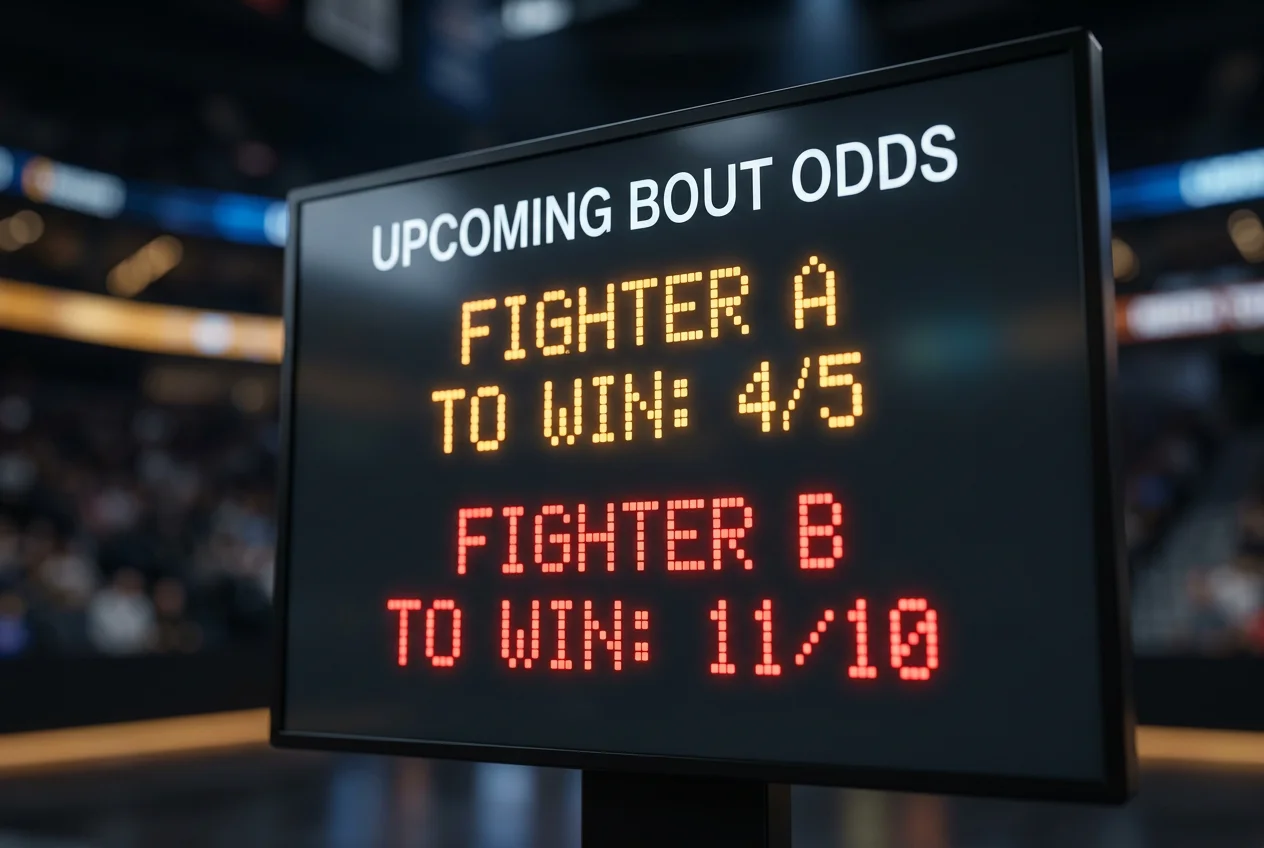
Nine years of staring at fight odds has taught me one thing above all else: the moneyline is where UFC betting starts, and for plenty of sharp punters, it is where it stays. No round groups to overthink, no method-of-victory guesswork — just pick the fighter who walks out with their hand raised. Simple does not mean easy, though, and that distinction is exactly what separates profitable moneyline bettors from everyone else.
Over the last decade, favourites in the UFC have won roughly 65% of all bouts. That number sounds comforting until you realise the odds rarely let you profit from it blindly. The bookmaker’s margin — the vig — is baked into every price, and the gap between a fighter’s true probability and the implied probability in the odds is where your edge lives or dies. Understanding how to read that gap is the entire game.
This guide breaks down the mechanics of UFC moneyline betting for UK punters: how favourites and underdogs get priced, when the chalk deserves your money, and when fading a heavy favourite is the smartest play on the card. If you are already comfortable with how UFC odds formats work, you are in good shape to dig straight in.
UFC Moneyline Odds Mechanics and Payout Calculations
I remember the first UFC moneyline I ever placed — a 4/6 favourite on a welterweight who seemed unbeatable on paper. He lost by submission in the second round, and the lesson cost me forty quid and a weekend’s confidence. But it also forced me to learn what those numbers actually meant instead of treating them as a scorecard.
A moneyline bet strips everything down to one question: who wins? In the UK, you will typically see fractional odds. If Fighter A is priced at 1/3 and Fighter B sits at 5/2, the first number tells you the profit relative to the second number as your stake. Bet three pounds on Fighter A at 1/3 and you collect one pound profit plus your stake back. Bet two pounds on Fighter B at 5/2 and a win returns five pounds profit plus your original two. The favourite always has a smaller first number relative to the second; the underdog flips that ratio.
Decimal odds make the maths even more transparent. That same 1/3 favourite becomes 1.33 in decimal — multiply your stake by 1.33 and you have your total return. The 5/2 underdog converts to 3.50. For anyone who grew up on American odds, 1/3 translates to roughly -300 and 5/2 to +250, but since most UK bookmakers default to fractional, that is the format I will stick with here.
Every moneyline carries vig — the bookmaker’s built-in margin. If both fighters had a genuine 50/50 chance, fair odds would be evens on each side. Instead, you might see 10/11 on both, meaning the implied probabilities add up to more than 100%. The overround is where the house earns its keep. In UFC markets at UK-licensed bookmakers, the overround on a main-event moneyline typically sits between 5% and 8%, though it can balloon on lower-profile Fight Night cards where less money sharpens the line. The UK sports betting market processes around 290 million online bets every single month, and a meaningful slice of that volume now lands on MMA.
Favourite Pricing: What the Short Odds Really Tell You
Most punters look at a 1/5 favourite and think “safe money.” I look at a 1/5 favourite and think “what am I risking relative to what I gain?” That mental shift changed my entire approach to moneyline betting.
When a fighter is priced at 1/5, the implied probability sits around 83%. You need to stake five pounds to win one. If that fighter genuinely wins 83 out of 100 hypothetical bouts against this opponent, the bet breaks even long-term before vig. The problem is that UFC odds in the -400 to -900 range — the deep favourites — historically convert at between 88% and 93%. That looks like a comfortable cushion until you factor in the times they lose. One upset at those odds wipes out four or five winning bets instantly.
Favourite pricing in UFC tends to be sharper on numbered PPV cards where public money floods the market and bookmakers have more data from betting volume to calibrate. Fight Night cards, especially those with lesser-known fighters, often carry softer lines because fewer sharp bettors are involved. I have seen the same fighter priced at 2/7 with one bookmaker and 1/4 with another on a Wednesday night card — a gap that would be unusual on a UFC 300-level event.
The key metric I track is implied probability versus actual historical win rate at similar odds bands. If a fighter is priced at 1/2 — implying a 67% chance — but fighters at that odds range have won only 62% historically, you are paying more than the outcome is worth. The UK gambling market generates roughly 2.48 billion pounds in annual gross gambling yield from sports betting, and a solid chunk of that comes from punters who never run this simple check before clicking “place bet.”
When to Back the Favourite
There is a card burned into my memory from early 2024 where I backed three favourites on the same night — all between 2/5 and 4/7 — and all three won. The combined profit was modest, but every single pick was grounded in a framework I trust. Let me walk you through it.
First, dominant style matchups. When a high-level wrestler faces a striker with documented takedown defence below 55%, the favourite tag is usually earned. Wrestling control neutralises the randomness of striking exchanges, and fights that spend significant time on the mat rarely produce the kind of flash knockouts that create upsets. If the favourite’s path to victory runs through grappling control rather than a coin-flip striking war, the shorter odds carry less hidden risk.
Second, activity and recency. A favourite coming off three fights in twelve months against credible opposition is a different proposition from one returning after eighteen months on the shelf. Ring rust is real, and the line does not always account for it fully. I lean towards backing favourites whose volume of recent cage time reinforces the skill gap the odds suggest.
Third, finishing ability against the specific archetype of the opponent. A favourite who finishes southpaw strikers regularly and faces another southpaw carries more predictive weight than a favourite with a generic 70% win rate. Context matters more than headline numbers.
Fourth — and this one gets overlooked constantly — watch for favourites who have faced and beaten the exact style of opponent before, ideally more than once. Pattern recognition in a fighter’s record is one of the most underused edges in moneyline betting. If Fighter A has beaten three pressure wrestlers in a row and is now favoured against a fourth, the odds are reflecting reality rather than hype.
When to Fade the Chalk
Here is a number that should make every favourite-heavy bettor uncomfortable: in 2024, underdogs priced at +200 and above — that is 2/1 or longer in fractional terms — won 39% of their fights. The historical average sits closer to 28%. Something shifted, and if you were not paying attention, that shift ate your bankroll.
I fade favourites most aggressively in three situations. The first is a stylistic nightmare disguised by a ranking gap. A top-ten striker facing an unranked grappler with elite submissions might be priced at 1/3 purely because of name recognition, but style matchups do not care about rankings. If the underdog’s path to victory is clear and repeatable — drag the fight to the mat and hunt for a choke — the favourite’s price is inflated by public perception rather than fight mechanics.
The second is a weight class move. Fighters moving up or down a division carry uncertainty the market often underprices. A favourite at lightweight who is debuting at welterweight faces unknowns around power absorption, speed differential, and size. The odds might shift a little, but rarely enough to reflect the genuine risk of competing in an unfamiliar division.
The third is emotional pricing after a spectacular win. A fighter who scored a viral knockout on a PPV main card will be overbet by the public in their next outing, compressing their odds beyond what the underlying matchup justifies. The smart play is not necessarily to back the opponent — it is to check whether the favourite’s implied probability genuinely reflects the matchup, or whether it reflects a highlight reel from three months ago.
Fading favourites is not about being contrarian for its own sake. It is about recognising that the moneyline is a market, and markets misprice things when emotion, recency bias, and casual money enter the equation. Over nine years, some of my best returns have come not from brilliant underdog picks but from simply avoiding favourites whose price did not match the fight in front of them.
Is it better to bet on UFC favourites or underdogs on the moneyline?
Neither side holds an automatic edge. Favourites win around 65% of UFC bouts, but the odds compress your profit margin on each win. Underdogs hit less often but pay more when they do. The profitable approach is evaluating each moneyline on its own merits — comparing implied probability to your own assessment of the fight — rather than defaulting to one side.
How much do UFC moneyline odds change after the weigh-in?
Odds can shift noticeably after the weigh-in, especially when a fighter misses weight or looks visibly drained. Moves of 10% to 20% in implied probability are not uncommon in those scenarios. On cards where both fighters weigh in cleanly, lines tend to tighten slightly as late sharp money arrives, but dramatic swings are rare unless injury news breaks simultaneously.
Written by the editors at ufc Fighter Betting.