Reach Advantage and Tale of the Tape UFC Betting
 Available in US
Every UFC broadcast starts with the tale of the tape — height, weight, reach — displayed side by side as though those numbers hold the secret to the fight’s outcome. Casual fans fixate on reach advantage like it is a cheat code. Bookmakers factor it into their models. And I spent an entire winter in 2020 building a spreadsheet to answer the question that had been nagging me: does reach actually move the needle enough to bet on?
The answer, after analysing hundreds of fights across multiple weight classes, is frustratingly nuanced. Reach matters — but only in specific contexts, at specific thresholds, and against specific styles of opponent. Treating it as a blanket predictor is how punters waste money on a metric that sounds important but behaves unpredictably without the right filters applied.
Reach Advantage Statistics: Correlation With Fight Victories
The raw correlation between reach advantage and UFC win rate is positive but modest. Fighters with a reach advantage win slightly more often than they lose, which sounds like a usable signal until you control for the fact that fighters with longer reach tend to be taller, tend to be more experienced at fighting at range, and tend to be better at maintaining distance — all of which are confounded variables that make reach look more predictive than it is in isolation.
Over the last decade, UFC favourites have won roughly 65% of all bouts regardless of reach differential. When I filtered for fights where the reach advantage exceeded three inches — a meaningful physical gap — the favourite win rate increased modestly, but the improvement was driven almost entirely by fights where the longer-reach fighter was also the stylistic favourite. In other words, reach amplifies an existing advantage rather than creating one from scratch.
The more honest framing is this: a three-inch or greater reach advantage correlates with a higher win rate because the fighters who possess long reach in the UFC tend to be the ones who have built their entire game around it. They jab at range, use front kicks to maintain distance, and circle away from pressure. Their reach advantage is not a physical trait that passively helps them — it is a strategic weapon they have trained to exploit for years. The reach number on the tale of the tape is a proxy for the style, not the cause of the outcome.
Where Reach Genuinely Changes the Betting Equation
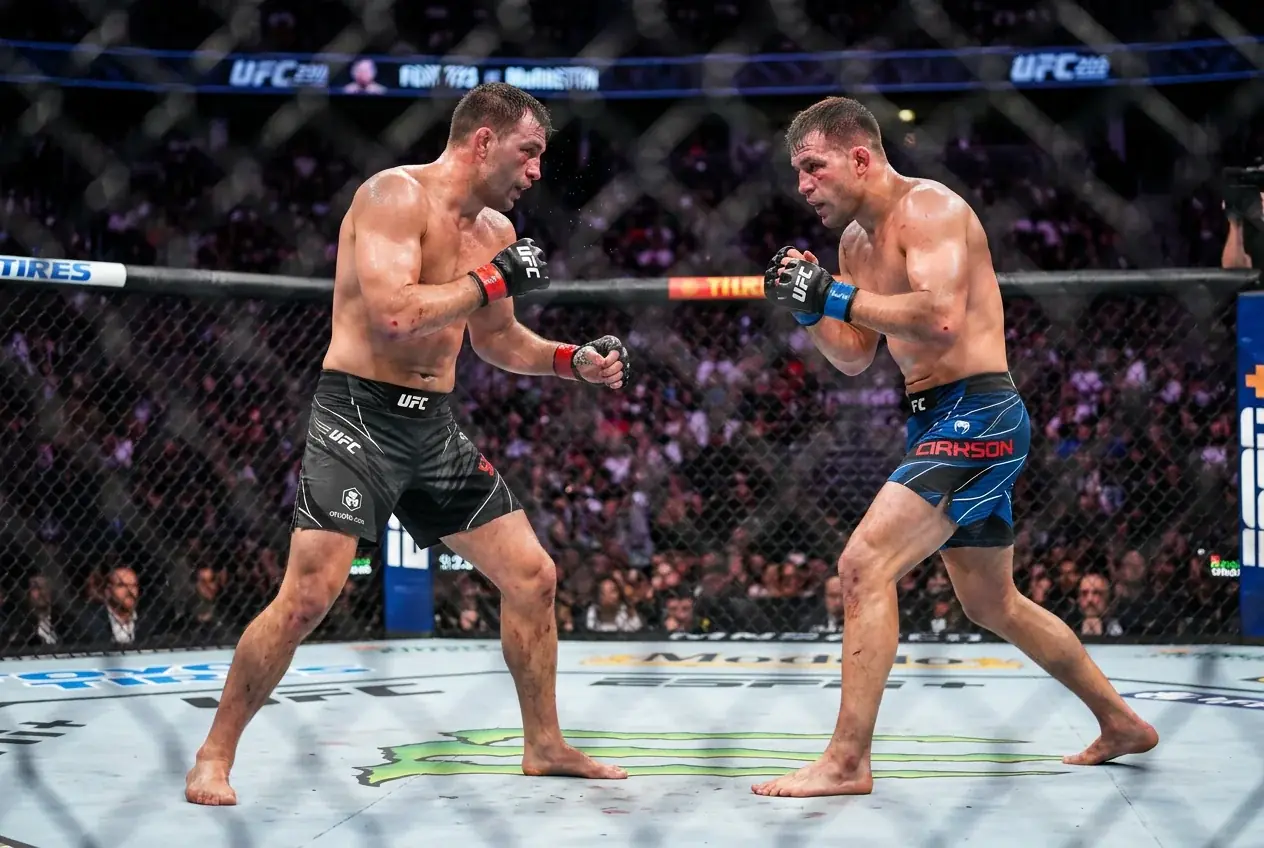
There are three scenarios where I treat reach as a meaningful factor in my fight analysis rather than background noise. The first is when two technical strikers face each other, both prefer to fight at range, and one has a significant reach advantage. In a range-fighting duel, every inch matters because both fighters are trying to land from the outside. The longer fighter can connect without being in return range, which compounds over fifteen or twenty-five minutes. If the betting line does not reflect that striking geometry, the reach advantage creates genuine value.
The second scenario is when a short-reach fighter is also a slow starter. Reach compounds over rounds because the longer fighter accumulates damage at range while the shorter fighter struggles to close distance. In round one, the gap might be manageable. By round three, the shorter fighter has absorbed jabs and teep kicks for twelve minutes and is fighting hurt, tired, and frustrated. Over/under rounds markets and distance props are particularly sensitive to this dynamic — a long-reach fighter against a slow starter is more likely to produce a late stoppage or decision, which the round totals often underprice.
The third is the heavyweight division, where reach differentials translate directly into power delivery. A heavyweight with a four-inch reach advantage can land clean power shots from outside the opponent’s effective striking range, and at heavyweight, those shots carry fight-ending consequences. The knockout rate at heavyweight is the highest in the UFC, and reach plays a more direct role in who lands the decisive blow than it does in lighter divisions where speed and volume can offset physical disadvantage.
When Reach Is Completely Irrelevant
A 74-inch reach means nothing when you are lying on your back with a black belt on top of you. Grappling neutralises reach almost entirely, and yet I regularly see bettors factor reach into fights where the most likely path to victory runs through takedowns and ground control. UFC odds in the +100 to -122 range — closely matched fights that could go either way — produce winners at barely above 50% regardless of the tale of the tape. In fights where grappling dominates, reach is statistical noise.
Pressure fighters also negate reach advantages by closing distance aggressively and fighting in the pocket. A fighter with a six-inch reach disadvantage who specialises in smothering, clinch work, and dirty boxing will spend the fight inside their opponent’s effective range, making the longer arms a liability rather than an asset. At close quarters, shorter arms generate faster hooks and uppercuts because the biomechanics of short-range power favour compact fighters.
Southpaw-versus-orthodox matchups present another context where reach data misleads. The open-stance dynamic changes the angles both fighters use to land, and reach advantage in open stance does not translate the same way it does in a mirrored orthodox-versus-orthodox exchange. I have seen long-reach fighters struggle badly against southpaws simply because their jab — the primary tool for exploiting reach — becomes less effective when the lead foot positioning changes.
How to Apply Reach Data to Your Bets
My practical framework treats reach as a conditional factor, not a standalone one. Step one: check whether the fight is likely to be contested primarily at range or primarily in the clinch and on the ground. If grappling dominates, discard reach entirely. Step two: if the fight will likely stay standing, check whether the longer fighter actively uses their reach or simply happens to have long arms without the footwork and jab to exploit them. A long reach without a jab is decorative, not functional.
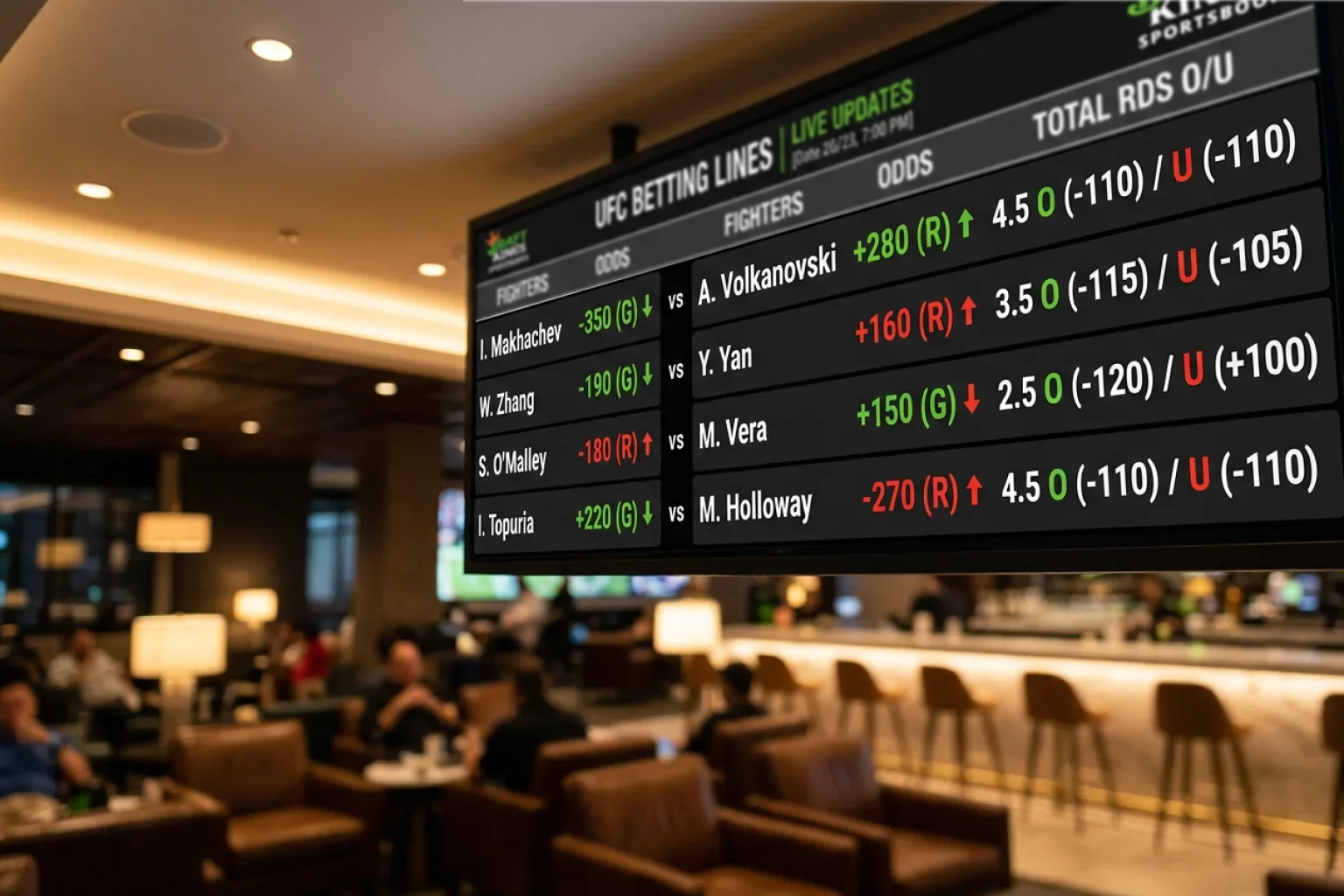
Step three: compare the reach differential to the odds movement. If the bookmaker has already priced the reach advantage into the line — you can tell because the longer-reach fighter’s odds have shortened since opening — the value may already be gone. The edge exists when the market has not fully accounted for how reach will shape the fight’s dynamics, and that typically happens on Fight Night cards where less analytical attention and less betting volume leave the lines softer.
Reach is one input in a multi-variable equation that includes striking accuracy, takedown defence, cardio, fight IQ, and a dozen contextual factors. Treating it as the equation rather than an input is the mistake I see most often, and it is the mistake that led me to build that spreadsheet in the first place. The data confirmed what experienced watchers already suspected: reach matters sometimes, in some situations, for some fighters. That conditional truth is far less exciting than “reach wins fights,” but it is far more useful when you are the one handicapping a fight with real money on the line.
How many inches of reach advantage make a statistically significant difference in UFC?
A reach advantage of three inches or more begins to show a modest positive correlation with win rate, but only in fights contested primarily at range. Below three inches, the impact is negligible after controlling for other variables like striking style, takedown defence, and experience. Reach alone is not a reliable predictor — it must be combined with stylistic analysis to carry betting relevance.
Do grapplers negate reach advantage in UFC fights?
Grapplers largely negate reach advantage by taking the fight to the mat, where arm length provides no meaningful benefit. Pressure fighters who close distance and work in the clinch also reduce the impact of reach. If your fight analysis suggests grappling or clinch work will dominate, reach differential should carry minimal weight in your betting decision.
Prepared by the ufc Fighter Betting editorial staff.