UFC Over/Under Rounds and Distance Betting Markets
 Available in US
You do not need to pick a winner to make money betting on UFC. That statement surprises a lot of newer punters, but it is absolutely true — and the over/under rounds market is the clearest example of why.
Total rounds betting strips away the question of who wins and replaces it with a different question entirely: how long does this fight last? For many matchups, that question is easier to answer with confidence than predicting the winner, and the odds available can be just as rewarding.
UFC Round Totals: How Sportsbooks Set Distance Lines
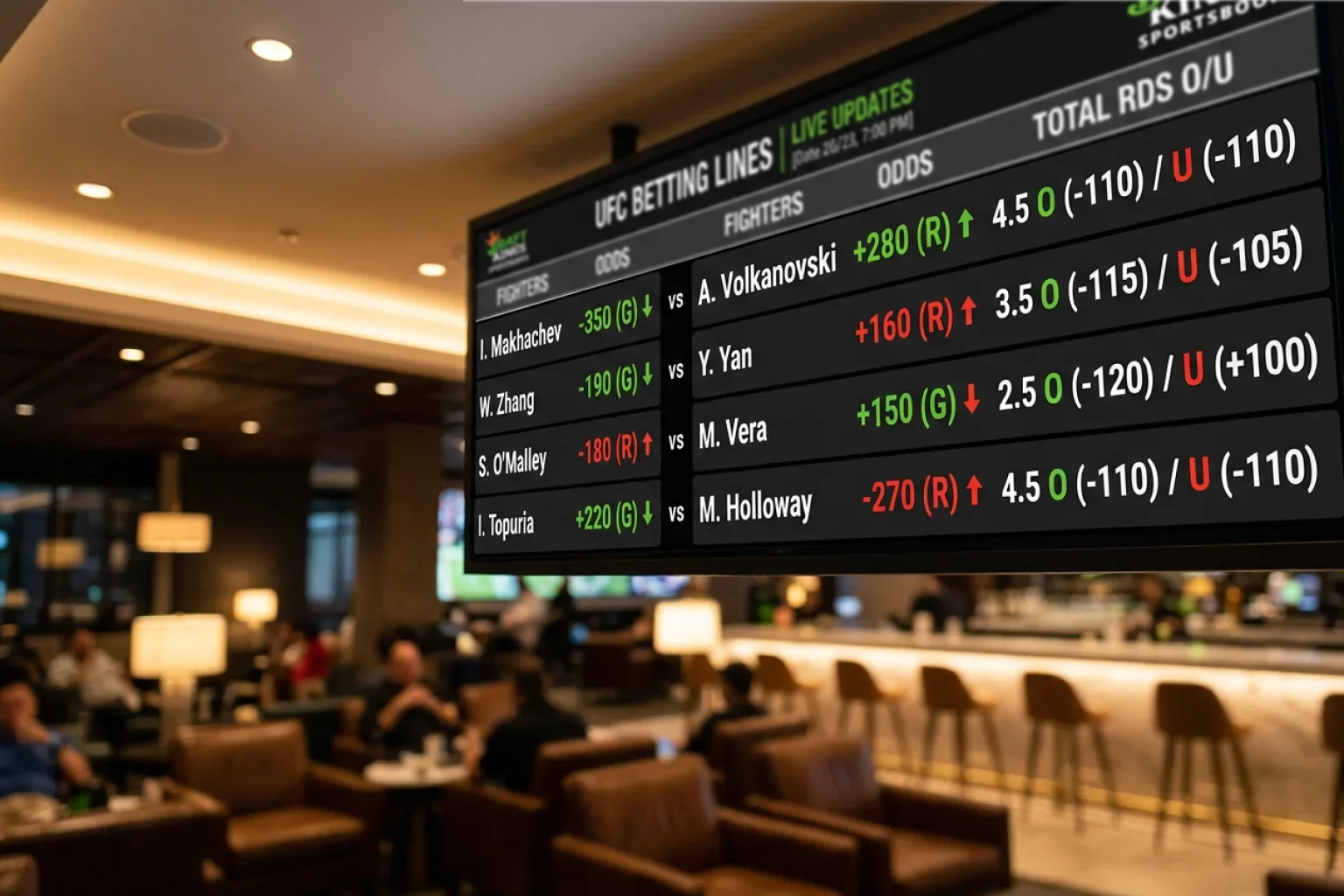
The standard line for a three-round UFC fight is set at 1.5 or 2.5 rounds. For five-round championship and main event bouts, the typical line sits at 2.5, 3.5, or 4.5 rounds. The half-round prevents a push — the fight either goes over or under, with no middle ground.
Bookmakers set these totals based on several factors: the fighters’ historical finish rates, the stylistic matchup, the weight class, and the overall tendency for fights at that level to produce finishes or decisions. The number itself is not an arbitrary starting point — it reflects the market’s best estimate of where the fight will end, balanced across the two sides of the line.
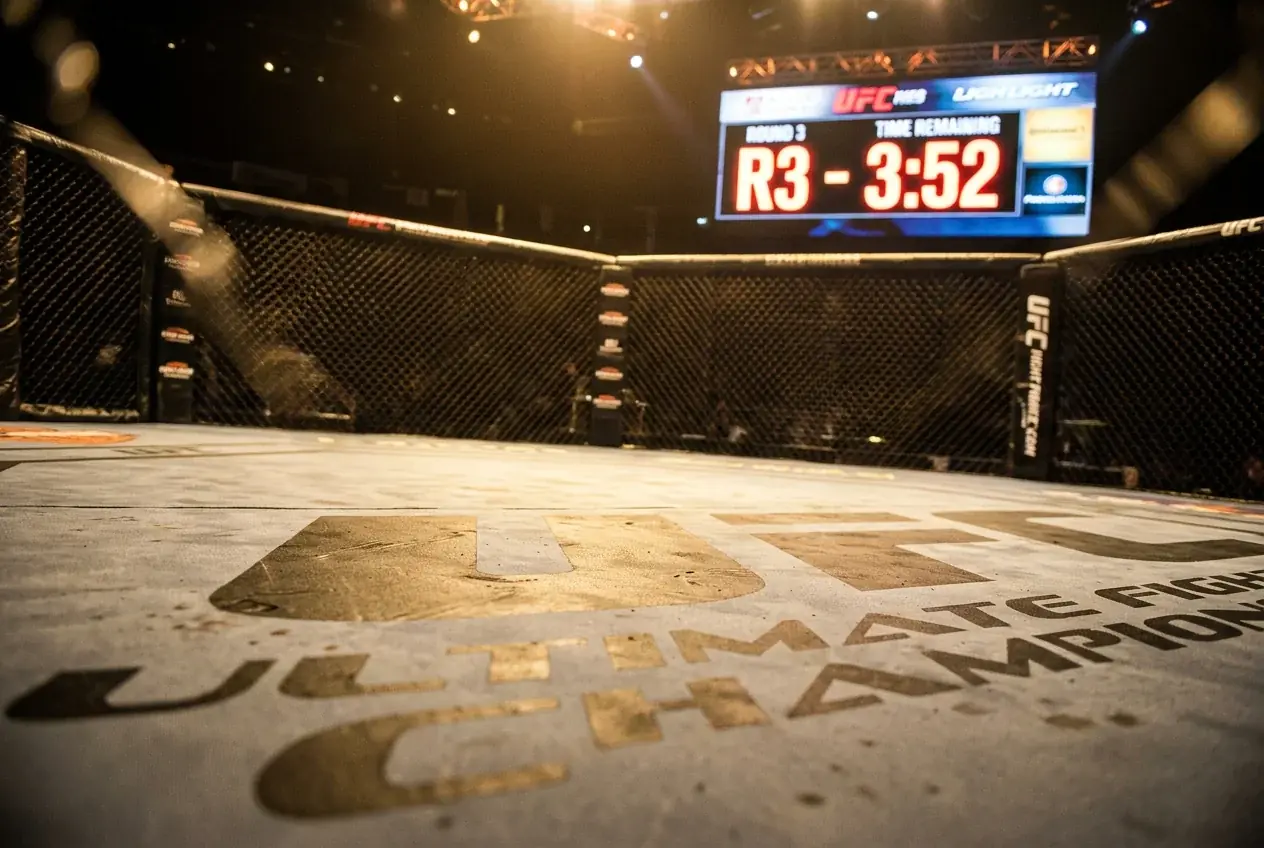
The critical thing to understand about over/under betting is the line’s relationship to the midpoint of a round. Over 1.5 rounds means the fight must reach the halfway mark of round two — two minutes and thirty seconds into the second round. Under 1.5 means the fight ends before that point. This timing distinction matters because it shapes how you assess the likelihood of each outcome. A fight that ends via TKO at 4:55 of round one is under 1.5. A fight that ends at 2:45 of round two is over 1.5. The margins are tight, and understanding exactly where the line falls helps you calibrate your analysis.
Pricing on totals tends to be more balanced than on moneylines. Where a moneyline might have a heavy favourite at 1/5 and a large underdog at 7/2, the over/under on the same fight is often priced close to even money on both sides. This balanced pricing means smaller edges translate into meaningful returns because you are not paying a large vig premium to back the obvious side.
Building Fighter Distance Profiles
The most reliable approach to over/under betting is building distance profiles for the fighters involved. A distance profile tracks how often a fighter’s bouts go the distance versus ending in a finish, and where those finishes tend to occur.
Favourites in UFC win approximately 65% of their fights, but that statistic tells you nothing about how long those fights last. Two fighters with identical moneyline win rates can have dramatically different distance profiles. One might finish 80% of opponents, almost never seeing the scorecards. The other might win close decisions routinely, going the distance in the majority of their bouts. The moneyline treats them the same. The over/under market treats them very differently.
To build a useful profile, look at a fighter’s last six to eight bouts and categorise each by how it ended: early finish, late finish, or decision. Weight recent fights more heavily — a fighter who has gone the distance in four of their last five outings is a stronger over indicator than their career stats might suggest if those earlier fights included more finishes at a lower level of competition.
Pay particular attention to how fights end against quality opposition. A fighter might finish regional-level opponents quickly but go deep rounds against ranked UFC competitors. That pattern suggests the over is more likely as the competition level rises. Conversely, a fighter who consistently produces early finishes against ranked opponents has genuine stopping power that the under reflects.
Division Patterns That Shape Distance Markets
Weight class is one of the strongest predictors of fight duration, and bettors who ignore divisional patterns in the over/under market are leaving edge on the table.
The lighter divisions — flyweight through featherweight — produce more decisions and longer fights as a general rule. The power-to-durability ratio at these weights means fighters can absorb significant strikes without being stopped. Flyweight bouts go the distance at one of the highest rates in the UFC, and the over is a structurally sound default in most flyweight matchups unless both fighters have exceptional finishing rates.
As you move up through the weight classes, finish rates climb and fight duration shortens. Middleweight represents a meaningful inflection point — this is where knockout power becomes a reliable fight-ending tool, and the under starts to carry structural value more frequently. The number of major MMA events has grown from roughly 100–110 per year in 2020 to 180–200 by 2025, and that expanded schedule means more data is available for tracking these divisional patterns over statistically significant sample sizes.
Heavyweight is the most extreme case. Fights at 265 pounds end early at the highest rate in the UFC. Both fighters carry legitimate one-punch knockout power, and cardio limitations mean the pace drops dramatically after the first round. The under on heavyweight fights is not automatically correct — some heavyweight matchups between cautious, technically oriented fighters do go the distance — but the structural tendency favours shorter fights so consistently that the over requires specific justification rather than the other way around.
Light heavyweight occupies an interesting middle ground. The finish rate is high but not as extreme as heavyweight, and the division features more stylistic variety. A wrestling-heavy light heavyweight matchup might grind to a decision, while a striker-versus-striker contest at the same weight is far more likely to produce an early finish. Divisional averages are useful starting points, but the specific weight class dynamics of each matchup should override any general rule.
Finding Value in the Over/Under Market
The best over/under bets emerge from the collision between fighter profiles and market pricing. When your analysis of both fighters’ distance profiles, the weight class tendency, and the specific stylistic matchup points clearly in one direction, but the odds are priced close to even, you have a value opportunity.
One consistent edge I have found over the years is in mismatched styles where the market prices the total based on the fighters’ individual profiles rather than the interaction between them. A high-volume striker facing a pressure wrestler might individually have moderate finish rates, leading the market to price the total as a coin flip. But the matchup itself — the striker trying to maintain distance while the wrestler seeks clinches and takedowns — often produces a grinding, attrition-based fight that favours the over. The fighters’ individual profiles do not predict how they fight each other.
Another value spot is in short-notice replacements, particularly when the replacement fighter is a known decision-type competitor stepping in against a moderate finisher. The market prices these fights based on limited information, and the replacement fighter’s style — often cautious, defensive, looking to survive and win on points — tends to push fights toward the over more frequently than the line reflects.
Finally, pay attention to the difference between 1.5 and 2.5 round lines. When a bookmaker offers both for the same fight, the pricing spread between them reveals how confident the market is about when a finish will occur. A fight where the under 1.5 is priced aggressively but the under 2.5 is close to even suggests the market expects a finish but is uncertain about timing. That uncertainty can be exploitable if your analysis gives you a clearer view of the fight’s likely trajectory.
What does over 2.5 rounds mean in UFC betting?
Over 2.5 rounds means the fight must last beyond the halfway point of round three — past the two-minute-and-thirty-second mark of the third round — for your bet to win. If the fight goes to a decision, the over wins automatically since all three rounds were completed. If the fight is stopped by knockout, TKO, or submission before reaching that midpoint of round three, the under wins. In a five-round fight, over 2.5 means the fight must reach midway through round three, which is a relatively low bar and will be priced accordingly.
Are heavyweight UFC fights more likely to go under the round total?
Yes, heavyweight fights produce the highest finish rate across all UFC weight classes. The combination of significant one-punch knockout power and limited cardio at 265 pounds means fights tend to end earlier than in lighter divisions. However, not every heavyweight matchup is a guaranteed early finish — technically cautious matchups between patient heavyweights can go the distance, and the under is not always correctly priced. Evaluate the specific fighters and their finishing history rather than relying solely on the divisional average.
Prepared by the ufc Fighter Betting editorial staff.